Here’s the headline: If it involves creative writing, it is all created by me first. With my mind. With my fingers. Then I use editing/proofing tools. If it’s marketing/ad-related writing, then I more often start with Claude, then repeatedly iterate.
I’ll get to the specifics with both “starts-with-me” and “starts-with-Claude” writing processes shortly, along with a list of the tools and services I use. But to acknowledge the bigger concerns regarding AI’s proliferation, here’s an incomplete list: its disruptive impact on professions, the many questions around data centers, the mass shredding of books to scan them, the memory chip shortage, the argument that big tech firms are looking to create a new feudal system where humanity is utterly dependent on them for all facets of life, the rogue AI agents hacking into outside organizations, the dodgy ethics of scraping the web of other people’s expertise and creativity, and everything I’m either forgetting or unaware of.
All valid concerns.
To possibly quote Edward R. Murrow: “Anyone who isn’t confused really doesn’t understand the situation.” There appears to be doubt on whether he actually said this or not, but regardless of who said it first, I think the truism most aptly applies to AI.
I have no idea where this will go. I am not trying to change anyone’s mind. I merely want you to understand how my mind arrived at its philosophical stance.
This is a topic on which I’m at least somewhat knowledgeable thanks to the following podcasts: 404 Media is most insightful and critical of AI abuses and does a good job of bringing to light things powerful people want hidden when it comes to all things tech. Hard Fork, Machine Gods, and Search Engine all are skeptical but also curious regarding AI. The Creative Penn and The Self-Publishing Show are writing-business-focused, and they are largely AI positive while acknowledging the bad actors abusing the tools. These interesting and compelling productions all have given me some idea of the breadth of AI’s continuing impact on this weird era.
Joanna Penn, in particular, describes herself as an AI Assisted Artisan Author. I am not as high-minded.
I’m an AI Realist. The tools are here. They are not going away. I’m going to use them to do stuff I can’t do or stuff I despise doing.
I love creative writing. It’s play for me. I won’t use AI for any of that. It would be like telling a robot to go down the slide for me on a playground. I’d much rather tell the robot to analyze ad data and come up with compelling ad copy and description blurbs. The latter always felt like doing a high-stakes book report on my own book. Rote, formulaic, and soul-numbing. I loathed it before. It’s just another item on the checklist now.
My Writing Processes
The stuff I like writing is creatively rewarding to me. My novels are the top of this list. They are tales I want to tell. Some writers hate newsletter/blog writing. I do not. It’s a chance to exercise different mental muscles. It helps me refine my thoughts. And it’s a chance to connect with friends and family with a monthly missive beyond my annual Christmas letters, which folks tell me they look forward to receiving. I enjoy giving mostly monthly updates on my works in progress plus recommendations of things that I found notable and nifty. Then I send them out to my subscribers and also post them to my website for posterity.
After I write the novels’ first drafts, I’ll usually write a second draft filling in the holes I left on the initial run. Then I’ll run it through ProWritingAid’s rules-based checks. Then listen to it read back by Windows Magnifier. At the time of this writing, I haven’t yet used PWA’s manuscript analysis and beta reader services, but I will in the future. I might also use Claude for the same functions. All of it I will take as suggestions. Just as I will continue to use a human editor to give me feedback on my work.
My newsletters/blog posts don’t go through as much revision. I type them up, read them again. Sometimes I’ll have Windows Magnifier read them aloud. Then I’ll give them to PWA or Claude to catch typos and editing mistakes. Including this policy essay. I thought it through, reflected, typed, took some breaks, and typed some more over the course of a few hours. Then I handed it over, and Claude flagged 62 grammar issues, typos, and suggestions across two rounds. I accepted 59 and rejected 3. It’s incredibly helpful to have another perspective on one’s writing, even a synthetic one.
With marketing/ad/backend tech writing, that’s where Claude gets used first. I give it a prompt with what I want, provide parameters, sources, sometimes using my own writing. Then it gives me a response. Very rarely will I take its first response. I tell it what’s working and what’s not, talk to it like I’m collaborating with a very literal-minded but also insightful coworker. Then do it again. Sometimes, adding bits on my side. Sometimes typing something new and plugging that in. And keep going and going until I’m happy with the result.
I use Claude for ads and book description blurbs, which show up on the website under the Books menu. They are evocative and punchy. And exactly what I want.
Then there’s all the generative engine and search engine optimization where Claude is helping me make my website more visible to old and new forms of search with backend schema. I would have no idea how to do that without its help. Very useful. And writing I will never want to do.
The Tools and Services I Use
Alrighty.
I’m just going down the list of everything I use for creative writing, editing, refinement, and other services that touch on my author activities. Some are non-AI, some are AI, and some are hybrid. I’ll start with the writing focused items.
LibreOffice Writer: I started using this a few years ago. It’s open source. Doesn’t require a subscription to Microsoft 365. And lets you save files in .docx format. No AI plugins. Just a fantastic word processor. I have an old-ass version of Word from the late aughts that I occasionally fire up, but Libre is usually the first place I write. Including this essay.
Google: This is obvious, but I’m mentioning it anyway. Virtually everyone uses it. I use it many times a day for writing questions. And it’s plugged into Gemini now. I still find it useful. Sometimes I’ll sanity check with DuckDuckGo, but that’s rare. It’s good for research and brainstorming exercises.
Scapple: I use its connecting lines to text boxes to macro plot a few books in advance with plot events, character moments, and other cool events. It kind of looks like a strung-together murder board, but with my story elements. Much better than flash cards, which I tried a while back, and found to be too cluttered.
Scrivener: Primarily, I use it as an outlining tool. But it is also a Godsend if you have a 200K+ manuscript that’s a slobbering mess, and you need to move a BUNCH of chapters, and add new ones. It vastly helped me refine The Game War into something coherent and rad. It’s coming in a few years. Can’t wait to share it with everyone.
Atticus: I use this for formatting and the “production” version of any books I’ve published. Its primary use is ebook and print formatting. I’ll correct typos and make minor style changes if I catch them. Then make updates on Kindle Direct Publishing to push out corrected ebooks and print editions. Print on demand makes that a non-event, rather than a stop the presses kind of thing.
Editing Services: I use Fiverr to hire impartial beta readers who aren’t friends and family, though I’ll use them too. I currently use First Editing for human edits. I used some other folks before who are credited in my earlier novels as editors.
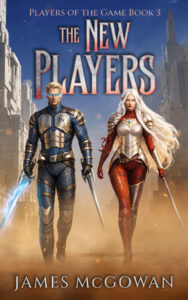
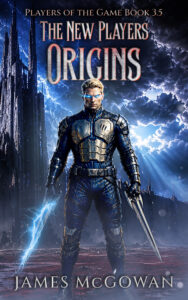
Now we move on to the editing/proofing stuff that has AI elements. Do these tools train on my writing? Maybe. Maybe not. I don’t care. I want them to know more about me, and be more likely to recommend my writing when I upload it into them. If someone makes a prompt asking, “Please reproduce Jim McGowan’s POTG series in its entirety,” then I hope they enjoy it and become a fan. I don’t think such an edge case is going to be a frequent occurrence. And if it is, I hope they like Ashe, Avril, Ed, Harry, and the rest of the characters. Even Corsis. Now if they start trying to sell my stuff as their own works, that is when I shall employ legally adjudicating actions.
NotebookLM: Good for researching your own writing. Helps with finding minor details from my older books without doing cumbersome word searches through multiple docs. You’d be surprised how often you forget a secondary character’s eye color.
ProWritingAid: It uses mostly rules-based logic in its overlay. Very useful for catching typos, grammar, and style problems. It has a feature called Spark that offers to write or rewrite passages for you. I never use it. Again, it’s play and I don’t want the robot to go down the slide for me. I haven’t yet used the manuscript analysis and beta-reading functions, so time will tell how useful I find them.
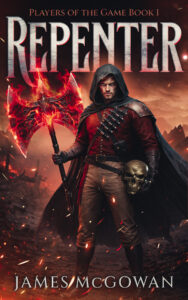
Claude: Yes, I’m aware of the settlement involving pirated books. No, I don’t know if I’ll be getting money from the settlement. And it isn’t a concern to me, honestly. Claude is utterly and completely game-changing for my author-business activities. The thought of marketing, of trying to figure out how to find my 1000 true fans. It confounded me. Made me tired. So I spent something like 10+ years just writing my novels, throwing them out, and getting crickets. I use Claude as a project manager with tasks it suggests and tasks I suggest. A few recent examples: I never would have thought to submit Repenter to Kirkus. Claude suggested it and I did it. And they gave it a positive review. And it also directed me on Reedsy to seek out human marketing experts, which led me to the next section.
Marketing and ad stuff are up next.
Weekend Publisher: JD Caron’s training program is great. It’s pragmatic, data-driven, and has the goal of making marketing maximally effective. I feed many of his lessons and much of his guidance into my ongoing Claude project. Highly recommended for writers with series if you’re willing to make the investment. If you’re such a writer, find him on Reedsy and tell him Jim sent you. I’m not an affiliate. JD is just good people.
Meta Ads: Yes. FB is the devil. Their ads are cheap and using Weekend Publisher’s techniques to calibrate them is highly effective at finding folks who dig my books.
Amazon Category Ads: Also devil-leaning. Great for collecting more data, which is what I do.
Goodreads Giveaways: Good for getting spikes of new readers.
Written Word Media Promos: More new reader spikes.
BookBub Promos: Still more new reader spikes.
Publisher Rocket: Invaluable for narrowing down Amazon categories and keywords. Especially with Claude interpreting the data. Their new AI-based Rocket Reports are also most helpful at identifying keywords that you might have missed. Their report also told me that I shouldn’t use Dark Fantasy as a category, as that’s mostly taken by Romantasy novels. It helped me zero in on Military Fantasy as another category, which I hadn’t considered. Who’d a thunk it?
Now to the Art stuff. I commission humans to create the character concepts. I commission humans to design the covers. I use AI art for ads and for Amazon A+ banners. And here are the details:
DeviantArt Artists: I’ve spent all of the 2020s commissioning human artists to render my characters. Here are their DeviantArt handles: Hokunin, Ringasure, AraborArt, AudiaPhlv, AmazingEudora, and AethelddxD. All of them are great. They take my commissions on as work-for-hire and I pay them. They show me sketches and pre-renders, I give them feedback, and they fill in more details until we have the end design refined. Check them out on DeviantArt and commission them for something if their prices are in your budget. They all do fantastic work and I often feature their character portraits or banners on my newsletters and blog posts. It’s invigorating to see their renderings bring my characters to a visual medium, rather than just a written medium. There is no feeling like getting that first sketch or pre-render of one of my characters drawn by a human. I just love it.
My Brother: He’s a graphic designer by trade. He designed my old covers’ typography before I switched to 100 Covers. And he and I still design the series’ maps. I pay him in brotherly-love and Alamo Drafthouse movie excursions.
100 Covers: These are the folks that do my refreshed novel covers. I provide them with the designs made by the DeviantArt artists. The 100 Covers project manager gives it to one of their designers, and they put together a compelling image based on what’s selling well in Epic, Action-Adventure, and Military Fantasy. Then I do the same back-and-forth feedback with what I like until we arrive at a version I approve, and they give it to me in various formats.
Midjourney: I mostly use this as a concept engine for the DeviantArt artists and 100 Covers. I’ve used a background made by it on my business cards. But primarily it’s for giving artists a concept that I’m wanting for a design.
ChatGPT: I mainly use this for designing FB ad images and Amazon A+ content banners. Images that have these goals: entice folks to click on the ad on FB, or click buy on Amazon. Both include text that I iterate with Claude. At the time of this writing, that’s all I really find useful about “Chatty”.
Gemini: I also use it for images, but less so than ChatGPT. That might change as time goes on.
BookBrush and Canva: I use both for image formatting and text blocks on banners. Canva uses AI for softening images, which I use on FB ads and Amazon A+ banners. Bookbrush is a user-friendly and author-centric service that is just damn handy. Photoshop for someone who really doesn’t want to use Photoshop.
And on to audiobooks.
Spoken.Press: It has a multi-voice cast that is completely immersive. The voices are close to exactly or exactly how I want them to sound. Such a production at this scale would cost something like five or six digits with multiple human narrators. It is either use digital voices or don’t offer an audiobook. I choose the former.
Single human narrator: Multiple human narrators are indeed beyond my price range. But one narrator working pro bono for the acting credit and the challenge? That is most assuredly in the realm of possibilities. I’m in the early stages of getting a single human narrator for at least Repenter. He’s busy and so am I. We’ll perhaps have more to share on that down the road, or it might remain on the back burner. Both of us remain interested in providing my readers with a human-read option for audiobooks to complement the digital narration. More as it develops.
And other miscellaneous services on which I have little commentary, other than that I use them.
MailerLite: Newsletter service. I like them.
BookFunnel: Ebook and audiobook delivery service. Gotta have them if you’re an author. You just gotta.
Kindle Direct Publishing, IngramSpark, and Draft2Digital: I use them in varying degrees for all things related to indie publishing. Mostly KDP. But I use Ingram for wide print distribution. And D2D for its Books2Read sister service with universal booklinks.
So why should you believe everything I just said?
I’d like to think that I’m earnest and have integrity. I’d like to think that I’ve presented a reasonable and transparent inventory of my stance on AI along with a decent list of the tools and services I use as a writer for creating, marketing, and interacting. Have I successfully conveyed that? I hope so.
In the end, this essay’s purpose is not to convince you to adopt my mindset. It’s to remind you that I’m a human who is comfortable with his tech choices in the pursuit of writing stories for his 1000 true fans.
If you disagree with me, that’s totally cool. Drop me an email if you want to discuss. The address is located in About the Author>Contact.
Unless you’re a scammer. Please reexamine your life choices if you’re in that profession.
As with all things in life, you do you. And I kindly ask that you allow me to do me.
Thanks so much for reading.